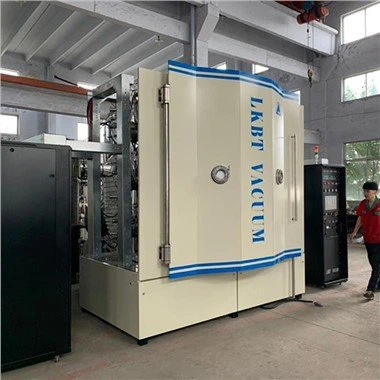

Plastic PVD Coating Machine

Why Choose Us?

Reliable Product Quality

All machine material parts of LKBT we only use 304 ss material to assure long term and stable vacuum, and we insist all parts manufactured by ourselves to assure manufacturing quality.


Wide Product Range

We have mf jet black color coating machine, big size stainless steel coating machine, plastic metallizing coating machine, tools hardness coating machine, glassware and ceramic pvd coating machine, machine can be specially customized according to customer detailed requirements.

Professional Production Equipment

We have all necessary manufacturing line and insist necessary machine parts not do out-sourced purchase, cutting and soldering also polishing of ss part all by ourselves to avoid any leaks on vacuum machine manufacturing.

Broad Sales Market

We have exported to many countries: Poland, Italy, Bangladesh, Thailand, Pakistan, Iran, Korea, Uzbekistan, Indonesia, Russia, Algeria, Canada, Spain and so on.


Definition of Plastic PVD Coating Machine


The plastic PVD coating machine is a prominent type, catering to industries that require a shiny, reflective surface on their plastic products. Another variant is the chrome machine for plastic, which is adept at handling complex shapes and sizes, ensuring a uniform coat on all surfaces. These machines employ different technologies, such as vacuum metallization and spray chrome systems, to achieve the desired finish on plastic substrates.
 

First 12 Last 1/2

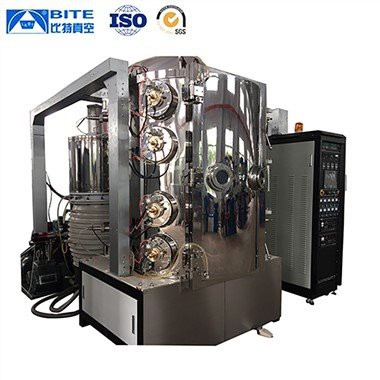
Made In China PVD Vacuum Coating Machine


Plastic PVD Coating Machines Have a Wide Range Benefits in Protecting Dies and Molds

Plastic PVD coating machines have a chemically saturated functional surface, which reduces adhesive wear and the build-up of deposits. This improves the flow behavior of the plastic melt and helps prevent stick/slip effects and burners or streaks on the product.

The coating's high hardness increases the wear resistance of the coated die or mold, protecting it from abrasive wear from hard, embedded particles in the plastic. This helps maintain the surface integrity during daily production, cleaning (e.g. between two plastic colors) and handling.

PVD multilayer coatings help prevent catalytic decomposition of the plastic by preventing contact with iron (Fe). They also protect the dies and molds from corrosion caused by chemical compounds that are formed during processing.


Applying Plastic PVD Coating Machines on Plastic Parts

Plastic PVD coating machines have always supported PVD coating on plastics. Our Low-Temperature Arc Vapor Deposition process is ideally suited for these materials. Using our technology, we have solved some challenging problems with plastics for our customers. For example, in the biomedical field, advanced polymers (e.g., PEEK) have become more accepted for use in implants. Still, the polymer is expected to integrate into the body in some cases to help fortify structural elements. In these cases, the surface of the polymer can be PVD coated with bio-compatible coatings, such as titanium, to help the polymer adapt and grow into its surroundings.

Polymers, by nature, are non-conducting, which is ideal for many of their uses. However, there are times when the ability to have a conducting surface is necessary, and this is where metal coatings come into play. Electronics enclosures may need shielding from EMI/RFI noise or for static discharge to enable use in extreme environments. Our coatings can adhere to many engineered polymers and provide a cost-effective way to alleviate such problems.

Plastic Chrome Plating Machine
Plastic Dip Coating Machine


Process of Plastic PVD Coating Machine

Special preparation is necessary prior to plating on plastic. The material is initially etched in a chromic acid-based solution to enhance its adhesive capabilities. Any excess chromic acid that is produced must then be neutralized. A solution consisting of palladium and tin salts is then applied to the material. Next, the surface of the material is coated with either nickel or copper from an electroless plating solution.

The palladium and tin salt solution serves as catalyst when combined with the nickel or copper. The material is now ready for electroplating using standard plating technology. Learn more about our industrial uses of electroplating here.

Another option is to apply a conductive paint to the plastic surface prior to commencing the electroplating process.


How to Clean and Restore Your Plastic PVD Coating Machine?


Have a look around many modern cars and you'll notice a chrome finish used around their grills and other areas. This is a plastic that's chromed, for the appearance and feel of real chrome, but is a cheaper, more lightweight and durable option for most manufacturers over traditional metal chromed parts. These types of plastic PVD coating machine parts are applied via a vacuum-metalised process, giving them a thin and somewhat more delicate, less durable metal look finish than the electrolytic chrome process used on metals. For this reason they will usually have a light protective clear coat applied to them after the plating.

We have a special combination of non aggressive products to clean and help restore them safely. You don't want to be using any type of polish, or even a clay bar, as the abrasives in them can scratch or micro-marr the soft finish and they will be virtually impossible to remove. Likewise, don't use any harsh or aggressive liquids on them as you can also etch or damage their surface.

This following cleaning method is for OEM plastic PVD coating machine that's not peeling off, has cracks, or any excessive wear/or rub through marks on it.


First Step - Safe Clean
First step is to wash and dry the car, or at least the area you will be working on. Then use the Clean Detail spray to give a further clean of the chromed surface. Spray it quite liberally onto the chrome and then wipe it away with the higher pile/plush side of the microfibre cloth. This should help remove a lot of the embedded dirt and built up grime that normal washing will not always touch.


2nd Step - Deep Clean
Now that the area is clean, it's time for the deeper clean using our non abrasive Paint Cleanse and Restore product. This can help chemically remove light pitting, fresh water marks and other harder to clean marks from the surface. Shake the cleanser well, then put a 10 cent sized dollop onto the low pile side of a clean cloth. Rub it gently into the chromed surface till you begin to notice it cleaning the marks away. Its unique combination of cleaners is what is doing the work here, chemically breaking down and removing them from the plastic PVD coating machine safely. Then turn the cloth to the plusher, high pile side and buff the area clean.


Final Step - Protect
The final step is to seal and protect the now shiny surface. For this we use either the sprays.
With 4 to 5 sprays into a folded cloth, apply, and then right after buff it off with a dry side of the cloth.
With you use two cloths as we say in its directions. Use a folded to the low pile side for the application, spray 4 to 6 sprays into the cloth and apply. Then use a second dry, also folded to the low pile side for the removal.
By adding this quick protection, the shine will last a lot longer and make it a lot easier to clean in the future as well.


Production steps of Plastic PVD Coating Machine


Plastic chrome plating is not as simple as applying a coat of chrome to the part. Typically, we will first coat the part with a layer of copper of nickel through a process called electro-less plating. This means that we do not use an electric current to apply the plating. Applying this coating makes the part conducive, which makes it possible to apply the chrome plating later on.

Think of this like the base coat that you'd apply to wall before painting it. This base coat prepares the part for the electro plating techniques that we use to apply the chrome plating. Without it, we can't bind the chrome plating to the plastic part.
Typically, the entire process follows the following six steps.


Step 1 – Etching
We immerse the part into a tank that contains a mixture of concentrated sulfuric and chromic acids. During this process, the acid mixture etches a serious a microscopic holes along the surface of the plastic part. It is these tiny holes that will contain the metal coating applied during the electro-less plating process.


Step 2 – Neutralization
Upon removing the part from the acid mixture, we immerse it into an alkaline mixture. This neutralizes the acids to ensure they don't continue eating into the plastic part. This neutralization is also crucial for ensuring no leftover acids disrupt the plating processes later on.


Step 3 – Catalyzing and Accelerating
We apply a catalytic film to the surface of the plastic part to prepare it for the electro-less plating process. However, before we do that, we must also immerse the part in a final bath that removes any leftover chemicals from the previous processes. This bath also accelerates the film, which means that it will react much more quickly to the metal plating that we apply to the part.


Step 4 – Electro-less Plating
We use the electro-less plating technique described above to apply a very thin layer of copper or nickel to the part. The purpose of this it to make the part conductive, which allows it to accept the chrome plating.


Step 5 – Electro Plating
Upon completing the electro-less coating process, we apply a negative charge to the new metal coating. We then immerse the negatively-charged part into a tank that contains positively-charged chrome ions. These ions get attracted to the negatively-charged copper or nickel layer, which causes them to attach themselves to the part. Upon attaching, the ions revert back to their neutral metallic form. This ensures that the chrome plate layer remains even throughout.
Upon completion of the electro plating process, we remove the part from the chrome and allow it to cool.


Step 6 – Quality Inspection
We conduct a thorough quality inspection on the part to ensure we've carried out the process correctly. This inspection examines the evenness of the chrome coating, as well as ensuring that the process hasn't led to any discrepancies in the part itself.
For large production runs, we use an error tracking process to ensure any mistakes get corrected before they can affect an entire batch.


Our Factory


We Longkou Bite Vacuum Technology Co.,Ltd----LKBT, established in 1985, LKBT team focus on R&D of vacuum PVD coating machine with more than 30 years experience, we also have branch company use ourselves manufactured PVD machine to offer PVD coating service in order to get the best coating recipe to share with every LKBT customers. As a professional PVD machine manufacturer, we are enough experienced to offer u the turnkey PVD project. All machine material parts of LKBT we only use 304 ss material to assure long term and stable vacuum, and we insist all parts manufactured by ourselves to assure manufacturing quality.


home-about-us.jpg (1292×726)


Video Frequency


Ultimate FAQ Guide to Plastic PVD Coating Machine


Q: Plastic PVD coating machine: Can you wax plastic chrome?

A: As for chromed plastic, it should't have any effect other than to clean of any gunk as it waxes. I've been using cleaner waxes of varying brands on both those type surfaces on older (11 to 14 year old) cars since new and they have protected very well. They surfaces are all still nice and shiny.

Q: Plastic PVD coating machine: Can you powder coat plastic chrome?

A: First and foremost, it's important to realize that you can't powder coat over chrome. The powder coating won't stick to the chrome. In order to do the job properly, you must strip the chrome surface off of the parts and then apply the powder coating.

Q: Can you plastic PVD coating machine?

A: Yes, a nano ceramic coating is completely safe to use on a chrome plated, chrome wrapped, chrome powder coated, or even spray-on chrome coated surfaces. No, a ceramic coating will not change the reflective properties, or add a tint of color to the chrome itself.

Q: Plastic PVD coating machine: How to do plastic chrome?

A: The parts to be "chromed" are placed in a vacuum chamber in which aluminum is vaporized with electric filaments. The aluminum coats the plastic to yield a uniform shiny surface. Shops that perform this process then also coat the aluminum with a urethane clear coat as is done with modern paint jobs.

Q: What is plastic PVD coating machine plating?

A: Many people make the mistake of thinking that they can only apply a chrome finish to a metal part. However, chrome plating plastic makes it possible to give a plastic part the same sheen as a traditional chrome part. This base coat prepares the part for the electro plating techniques that we use to apply the chrome plating. Without it, we can't bind the chrome plating to the plastic part.

Q: Can plastic PVD coating machine coat all plastic parts?

A: Unfortunately not. The chrome plating process exerts some pressure onto the plastic part, which makes it difficult to carry out on flexible plastics without them breaking. Typically, we only carry out the process on rigid plastics that can endure the process. We will conduct an inspection of your parts before starting the process to ensure that they're suitable.

Q: What are the benefits of using plastic PVD coating machine to chrome-coat plastics?

A: There are several reasons why you may wish to apply a chrome coating to a plastic part. These include the following:
To create the attractive chrome aesthetic at a lower cost than creating chrome parts.
Protecting the part from ultraviolet rays and other issues that may degrade it.
Improvement of the physical properties of the part, such as its ability to deflect water or its tensile strength.

Q: Plastic PVD Coating Machine: How thick is chrome plating on plastic?

A: Thicknesses range from 2 to 20 μin (0.05 to 0.5 μm), however, they are usually between 5 and 10 μin (0.13 and 0.25 μm). The chromium plating is usually applied over bright nickel plating. Typical base materials include steel, aluminium, plastic, copper alloys, and zinc alloys.

Q: What you should know when use plastic PVD coating machine?

A: It is imperative to wear the safety gear that involves masks, heavy duty gloves, body gear, etc during the hard chrome process. It is strictly advisable that no amateurs must try the process without due supervision of a trained professional.

Q: Plastic PVD coating machine: What are the safety concerns of electroplating?

A: From a safety perspective, workers in electroplating facilities may be exposed to toxic chemicals that can cause a range of health problems such as skin burns, allergy, respiratory issues, and in extreme cases, cancer or other serious illnesses due to prolonged exposure.

We're well-known as one of the leading plastic pvd coating machine manufacturers and suppliers in China. If you're going to buy high quality plastic pvd coating machine with competitive price, welcome to get quotation from our factory. Also, customized service is available.

sealcoating equipment, Silver Color Vacuum Coating Machine, fluidized bed powder coating machine

(0/10)

clearall