Tools Hardness PVD Coating Machine

Why Choose Us?

Reliable Product Quality

All machine material parts of LKBT we only use 304 ss material to assure long term and stable vacuum, and we insist all parts manufactured by ourselves to assure manufacturing quality.


Wide Product Range

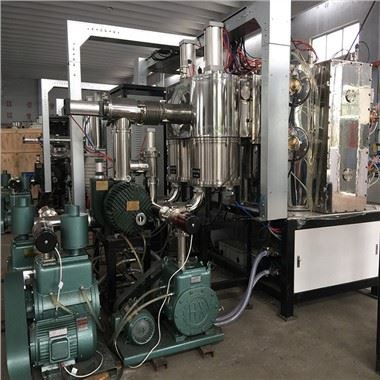
We have mf jet black color coating machine, big size stainless steel coating machine, plastic metallizing coating machine, tools hardness coating machine, glassware and ceramic pvd coating machine, machine can be specially customized according to customer detailed requirements.

Professional Production Equipment

We have all necessary manufacturing line and insist necessary machine parts not do out-sourced purchase, cutting and soldering also polishing of ss part all by ourselves to avoid any leaks on vacuum machine manufacturing.

Broad Sales Market

We have exported to many countries: Poland, Italy, Bangladesh, Thailand, Pakistan, Iran, Korea, Uzbekistan, Indonesia, Russia, Algeria, Canada, Spain and so on.


Definition of Tools Hardness PVD Coating Machine


Tools hardness PVD coating machine is a vacuum coating process that will produce a beautiful decorative and a very functional finish on the item being coated. PVD utilizes a titanium nitride that provides an extremely durable and a tough wearing coating. PVD coatings possess a far higher resistance to wear than traditional gold plating.


First 123 Last 1/3

The Benefits of Tools Hardness PVD Coating Machines for Cutting Tools and Injection Molds


Here are 14 ways that acs and pvd coatings create an advantage for injection molding shops and machine shops.


Extended tool life.
The ultra-hard, micro-thin layer of metal particles protects your tools against abrasive materials, hot operation temperature and the natural wear-and-tear of cutting tools.


Reduced machine down time.
When your tools last longer, you don't need to waste time and effort switching them out, resetting and performing test runs. All hands stay on deck for longer, and everyone (you and your customer) wins.


Better cuts.
The pvd coating enhances lubricity and hardness, allowing your cutting tools to cut through materials with greater ease, making sharper, cleaner cuts. And since the tools will last longer, you'll see these cleaner cuts for more machine cycles.


Faster cuts.
Cutting tools coated with pvd coating can often run at a faster feed rate and still achieve the same quality of cuts, because the cutting surfaces are enhanced by the dense and smooth pvd coating.


Smoother punches.
Likewise, forming tools coated with pvd coatings experience less galling and material pickup, leading to higher quality results and increased uptime.


Higher quality molded products.
The lubricity of pvd coatings on injections molds helps the molten plastic slide over the mold and penetrate crevices much more effectively than uncoated molds.


Reduce labor costs.
Harder tools cut faster and last longer, meaning you get more runs from a single man-hour than you would with uncoated tools. Plain and simple.


Reduce operational costs.
In many cases, cutting with coated tools can reduce (or even eliminate) the need for cooling agents because the coatings are able to withstand a much hotter temperatures than the original metal.


Improved ejection of molds.
When injection molds are pvd coated, the final molded product is ejected with ease, speeding up the process, reducing rejects and improving overall efficiency.


Reduced friction.
In applications like injection molds, punching, forming and cutting, pvd coated tools and molds experience less friction.


Versatility.
There are numerous kinds of pvd coatings, with more emerging every year. Different coatings have different benefits, and you should consult with a coating specialist before determining the best solution for your application. Check out our full list of our coating capabilities.


Environmentally friendly.
Unlike other coating methods, such as electroplating, pvd coating is free of hazardous materials and produces no chemical waste.


Increased corrosion resistance.
Pvd coatings are more resistant to corrosion than electroplating and will help injection molds and cutting hold up longer against the elements and corrosive agents.


Faster speeds and feeds on cnc cutting tools.
Cutting tools on cnc machines that are coated with a pvd coating can achieve higher feed rates and spindle speeds while maintaining the same high quality cuts.


 

Jewelry PVD Coating Machine


Tools Hardness PVD Coating Machine: How Does It Work?

It was not easy to make a good coating on metal surfaces. The main reason was that the coating process itself was very complex and time-intensive. Nowadays, there are many years of experience in developing new PVD technology.

PVD (Physical Vapor Deposition) is a method of growing thin layers of metal on an object by heating it to a high temperature and then using an electric field to cause self-heating of a gas in which the metal atoms are embedded. The result is a thin layer of metal deposited from a molten state onto an object.

The tools hardness PVD coating machine can be used in many industries, including the auto industry, aerospace industry, medical science, and electronic industry. It is widely used in the production of electronic products such as mobile phones, laptops, and other consumer products.


Tools Hardness PVD Coating Machine: Testing Techniques to Measure Chromium Coating Quality


One: Thickness Measurement
In industrial applications, thickness measurement tests ensure that thin dense chromium coatings adhere to strict specifications that directly influence performance: wear resistance, corrosion resistance, and overall durability and uniformity. Moreover, maintaining the correct thickness is a matter of cost efficiency, as deviations can lead to wastage or necessitate costly rework. Finally, thickness measurements play a role in predictive maintenance strategies, preventing unexpected failures and prolonging the lifespan of the coated component.


Two: Adhesion Testing
Adhesion testing ensures coating integrity by verifying that it adheres properly to the substrate, a critical factor for the TDC performance under various service conditions, including exposure to mechanical stress and environmental factors. These tests are integral to quality control and provide insights into the long-term behavior of the TDC, predicting its longevity and resilience.
ASTM B571, an essential standard practice for assessing the adhesion of chromium coatings to various substrates, outlines several different methods for qualitative assessment of adhesion. Bend Test
The Bend Test is a method used to assess the adhesion and flexibility of TDC coatings under deformation, bending, or flexing stresses. After bending, the chromium coating is inspected for cracking, detachment, or other failures. The degree to which the coating withstands bending without damage indicates its adhesion quality and flexibility.


Three: Hardness Testing
A significant aspect of the value of chromium coatings is their hardness. Hardness testing in the context of coatings like chromium involves measuring how resistant the surface is to deformation or penetration.


Four: Corrosion Testing
Corrosion is a massive issue in industrial applications — even the strongest metals, such as stainless steel, experience degradation over time, and can ultimately lead to catastrophic metal failure. Corrosion resistance testing is critical for evaluating the longevity and durability of chromium coatings, including specialized forms like thin dense chrome.


Five: Wear Resistance Testing
Wear resistance testing is essential in industrial applications where the surface is subject to mechanical wear, including physical abrasion, impact, and erosion.


Tools Hardness PVD Coating Machine: How Thick Should Hard Chrome Plating Be?

Hard chrome plating is used in applications where parts will be subjected to a very high degree of wear, requiring a thicker layer of chrome. The added thickness induces cracks and greater
porosity on the chrome surface. The cracks increase as the chrome thickness increases. Further machining, such as grinding, polishing, or honing, is necessary to improve the hard chrome- plated surface so that it can be used in contact with spring-energized seals. A coarse surface finish significantly decreases the wear resistance of the pring -energized seal.

Hard chrome plating is used in approximately 95% of all applications with the remaining 5% of applications using thin dense chrome plating. Hard chrome plating is generally applied to exterior surfaces where subsequent machining is easier.

Tools hardness PVD coating machines operate best against a hard chrome-plated surface when used with a lubricant, which promotes a film between the plated surface and the seal surface. The lubricant can be wet, dry, or a combination of both. Wet lubricants may need to be applied on the chrome- plated surface at low speeds under 500 ft/ min (152 m/ min), pressures under 50 psi (3.2 bar), and temperatures under 70 °F (21。C) to fill in the suface irregularities and subsequently reduce seal adhesion.

PVD镀金机
家具 PVD ​​镀膜机


Tools Hardness PVD Coating Machine: What Are the Differences Between Pvd Coating and Gold Plating?

Method of application - PVD uses a vaporisation process in a vacuum. While gold plating uses electroplating.
Durability - PVD coatings are more durable than gold plating. This is because the method of application creates a stronger bond between the metal layer and base metal.
Colour and finish - PVD can offer a wide range of colours and finishes in comparison to gold plating.
Cost and accessibility - gold plating is more affordable and easily accessible than PVD coating. This is because gold plating requires less specialist equipment and energy.
Environmental impacts - PVD coating is considered more eco-friendly compared to gold plating. The process does not use liquid solvents or hazardous chemical substances.
Hypoallergenic properties - PVD coating doesn't make use of hazardous chemicals and liquid solvents, whilst gold plating does. This reduces the risk of skin allergies when wearing.


Tools Hardness PVD Coating Machine: How Do You Check Hard Chrome Plating Hardness?


Testing the hardness on a chromium plated bar, or, in general, on a chrome layer, is something different from testing the hardness on a steel bar or tube.A chromium overlay is too thin to stand a normal test, according to the Rockwell or Vickers standards; the test would practically register only the hardness values of the base material. For a chromium plated surface we can only carry out a microhardness test.
A micro-hardness test is usually performed using the Vickers method, i.e. with a penetrator which has the shape of a pyramid with a vertex angle equal to 136°. The test load cannot be higher than 100 grams.
The impression, square shaped, is observed on the microscope;
Under these circumstances, the test should give values that correspond to the requested standards for hard chrome: HV 0.1/HV 800 - 1000, corresponding to HRC 64 - 69.
Keeps constant the values of the hardness on their production in the range of HV 0.1 / HV 850 -1000, i.e. HRC 66 - 69.
Anyway, if the user is concerned about the hardness, it is advisable to use induction hardened bars as a base material; in this case the chromium overlay receives a much better support from the very hard base and it is much less delicate in comparison with the one of ordinary chromium plated bars.


Our Factory


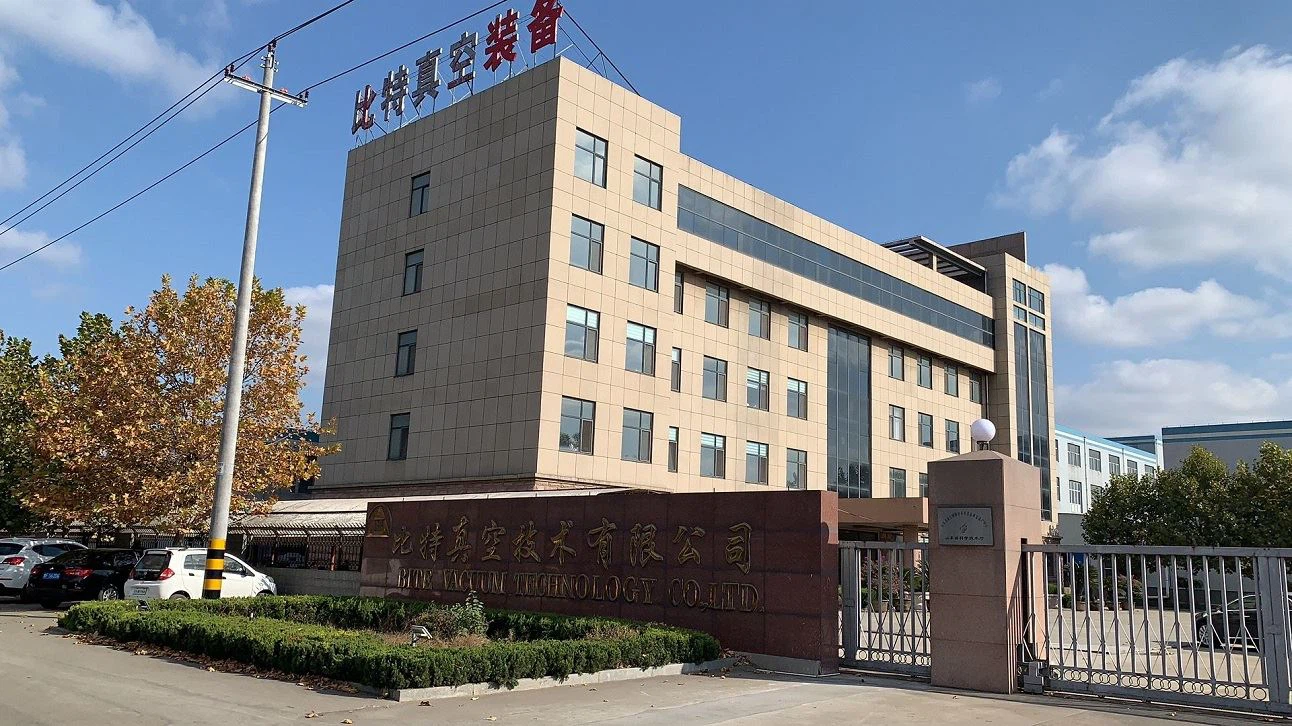
We Longkou Bite Vacuum Technology Co.,Ltd----LKBT, established in 1985, LKBT team focus on R&D of vacuum PVD coating machine with more than 30 years experience, we also have branch company use ourselves manufactured PVD machine to offer PVD coating service in order to get the best coating recipe to share with every LKBT customers. As a professional PVD machine manufacturer, we are enough experienced to offer u the turnkey PVD project. All machine material parts of LKBT we only use 304 ss material to assure long term and stable vacuum, and we insist all parts manufactured by ourselves to assure manufacturing quality.


home-about-us.jpg (1292×726)


Video Frequency


Ultimate FAQ Guide to Tools Hardness PVD Coating Machine


Q: Tools hardness PVD coating machine: How good is PVD coating?

A: PVD coating thickness. For comparison, high-quality tool steel used in drill bits has a hardness of around 1000 Vickers; the hardness of zirconium nitride (ZrN), for example, is typically about 2500-2700 Vickers. Therefore, in decorative applications with mild to moderate wear, coatings a few tenths of micrometer (0.2 to 0.5μm) thick can withstand many years of use without significant wear.

Q: Is tools hardness PVD coating machine gold plating durable?

A: The most common use of PVD coating is to form a gold layer over a base metal for jewellery. Durability - PVD coatings are highly resistant to tarnishing, corrosion, and scratching. They typically last longer than other types of coating. The PVD coating permeates the surface of the metal, allowing for a more durable finish. PVD coatings also tend to be thicker.

Q: What precautions should be taken tools hardness PVD coating machine?

A: Never touch the electrodes while the circuit is on, as this could result in an electric shock. Always turn off the power supply before connecting or disconnecting the electrodes. Lastly, always conduct experiments in a well-ventilated area. Some electrolysis reactions can produce gases that are harmful if inhaled.

Q: What are the safety precautions for tools hardness PVD coating machine?

A: Safety Precautions. Avoid skin contact with all chemicals. Do not operate electrical circuits with wet hands or in wet areas. Be sure the area is dry before completing a circuit. Wear chemical splash goggles, chemical-resistant gloves, and a chemical-resistant apron.

Q: Why is tools hardness PVD coating machine an important device for changing metal surfaces?

A: The ability to replicate the appearance of metallic surfaces with metal PVD coating serves many applications. Applying PVD coating to plastic parts is particularly relevant as companies reduce the use of hexavalent chrome plating. Their parts need to provide the look of chrome while avoiding the highly regulated chemical processing required for electroplated coatings. To achieve a chrome look, apply a polymeric coating (paint/lacquer/e-coat), then add our PVD chrome over those finishes. Depending on the end-use performance requirements, an additional clear coat may be applied over the PVD chrome layer as needed. In addition to chrome, our coatings come in black, stainless steel, nickel, and graphite—but chrome is by far the most requested finish.

Q: What are the 4 stages of Tools Hardness PVD Coating Machine?

A: The process of PVD has been described in the following stages: in stage 0, there is no PVD and the vitreous is completely attached; in stage 1, the vitreous is partially separated from the macula but remains fully attached at the fovea; in stage 2, the vitreous is partially separated from the fovea but remains attached at the foveola; in stage 3, the vitreous is fully separated from the macula but remains attached at the optic nerve; and in stage 4 or complete PVD, the vitreous is fully separated from the macula and the optic nerve.

Q: What is the cleaning process of tools hardness PVD coating machine?

A: The cleaning process involves several steps, including ultrasonic cleaning, rinsing and drying. In mass production facilities, ultrasonic cleaning is the most commonly used method for cleaning substrates before PVD coating. The ultrasonic cleaner system used for preparing burrs before PVD coating is a multi-step process. The first step involves cleaning the parts in a solvent to remove any oils, lubricants or cooling emulsion.

Q: Tools hardness PVD coating machine: Does PVD gold plating tarnish?

A: PVD coated stainless steel jewellery, however, is extremely tough and will not tarnish overtime so if you're thinking of treating yourself to one of best-selling gold chains – like our gold box chain or beaded gold choker – you can be confident that it will stay looking it's best for years to come.

Q: Tools hardness PVD coating machine: How long does PVD gold plating last?

A: The typical lifespan of a PVD coating on wristwatches ranges from a few years up to 20 years. This duration depends on the thickness of the coating, the quality of the application process, and how the watch is used and maintained.

Q: Will it lose its gloss after being processed by tools hardness PVD coating machine?

A: PVD coated stainless steel jewellery, is extremely tough and will not tarnish overtime so if you're thinking of treating yourself to one of best-selling gold chains – like our gold box chain or beaded gold choker – you can be confident that it will stay looking it's best for years to come.

We're well-known as one of the leading tools hardness pvd coating machine manufacturers and suppliers in China. If you're going to buy high quality tools hardness pvd coating machine with competitive price, welcome to get quotation from our factory. Also, customized service is available.

Decoration Tools PVD Coating Machine, Spoon Coating Machine, roll coater

(0/10)

clearall